Jenny Shin earned her first win since 2016 at the Women’s Scottish Open with an efficient, technically sound golf swing. Her driver impact position gives coaches a useful 3D example of how elite movement relationships can appear when the downswing is sequenced from the ground up.
The lesson is not to copy one tour player’s exact numbers. It is to understand the relationships between the pelvis, chest, and target at impact—and then use the player’s own Sportsbox data to diagnose how they deliver the club.

The Three Impact Relationships
At impact, Jenny demonstrates three relationships commonly seen in elite ball striking:
- Her pelvis is farther forward than it was at address.
- Her pelvis center is farther forward than her chest center.
- Her pelvis is more open to the target than her chest.
These are not three positions to force independently. They are connected outcomes of a downswing in which the lower body leads and the upper body responds.
1. The Pelvis Is Forward of Its Address Position
Pelvis Sway measures the target-side movement of the pelvis relative to its address position. Jenny’s Pelvis Sway is +2.6 inches at impact.
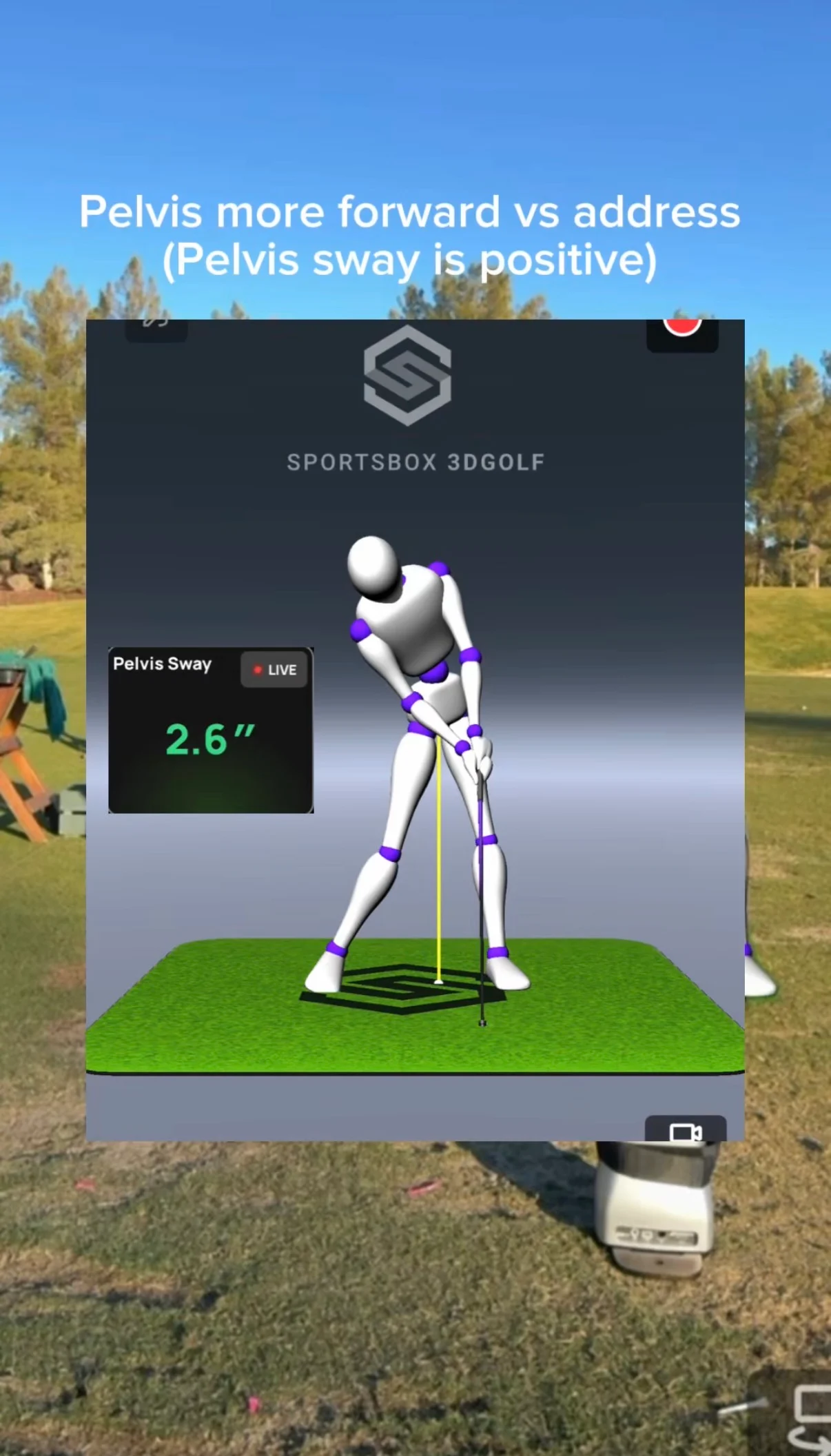
The positive value means the pelvis center has moved toward the target compared with address. For a coach, the important question is not whether every player reaches +2.6 inches. It is whether the player has moved far enough forward to support the intended delivery without hanging back or forcing the upper body toward the target.
This impact checkpoint begins earlier in the swing. A player must manage Pelvis Sway in the backswing, begin recentering before reaching the top, and allow the pelvis to initiate the downswing. The impact number is the result of that sequence—not a position to manufacture at the last moment.
2. The Chest Center Remains Behind the Pelvis Center
Sway Gap describes the front-view relationship between the chest center and pelvis center. Jenny’s Sway Gap is -5.6 inches at impact.
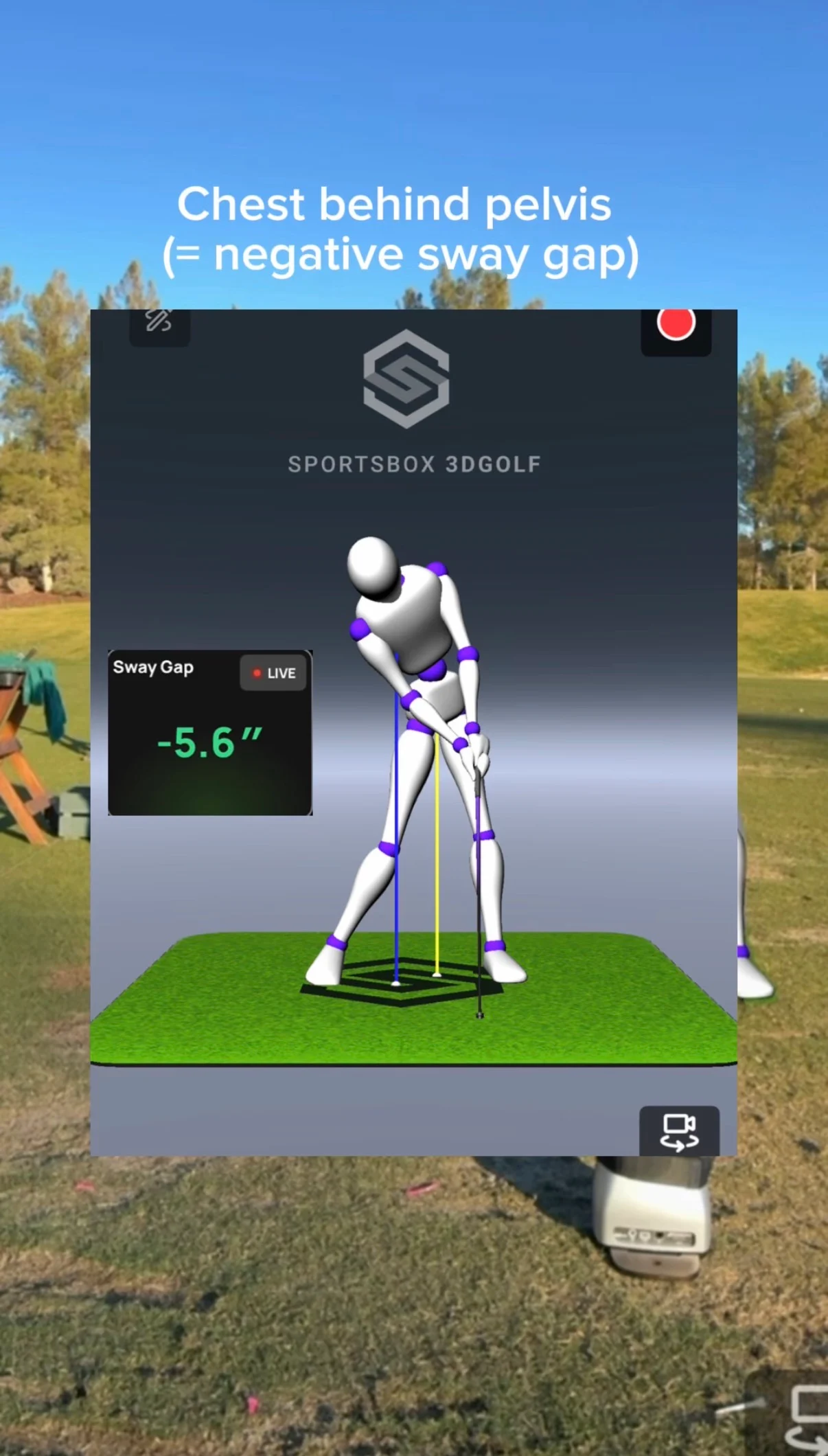
The negative value means the chest center is behind the pelvis center. This is different from simply telling a player to “stay back.” Jenny’s pelvis has moved forward relative to address, while the chest remains behind the pelvis. Both measurements need to be read together.
That relationship can help a player deliver the driver with the lower body leading rather than throwing the chest and arms toward the ball. If the chest gets ahead too early, the player may lose the separation and space needed to deliver the club consistently.
3. The Pelvis Is More Open Than the Chest
At impact, Jenny’s Pelvis Turn is 45° and her Chest Turn is 39°. Her pelvis is therefore 6° more open to the target than her chest.
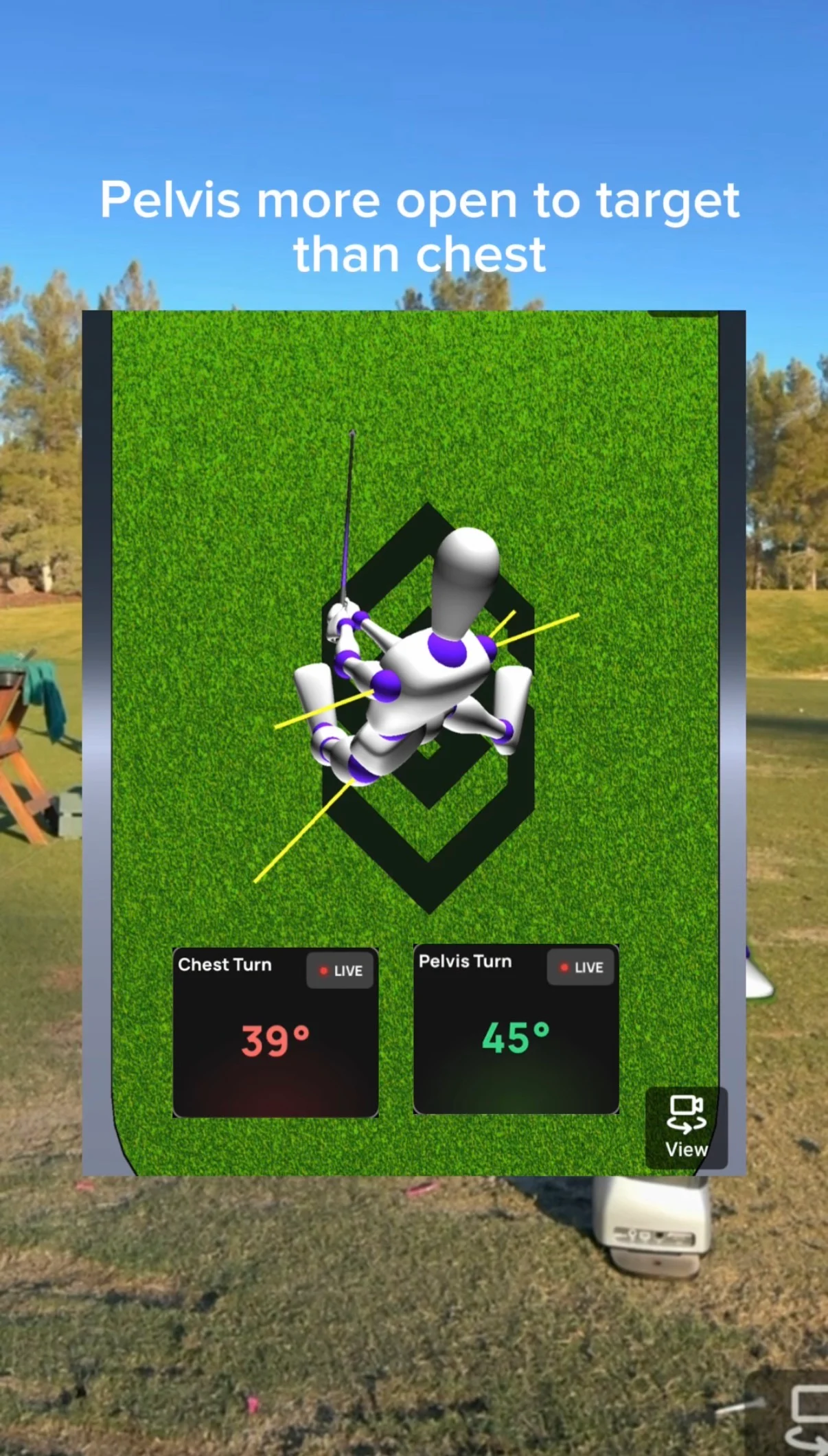
This relationship reflects the order of the downswing. The pelvis begins first, followed by the chest, arms, and club. Because the pelvis leads, it can remain more open than the chest at impact instead of the whole body arriving as one block.
For coaches, the six-degree difference is an example—not a universal target. The useful coaching question is whether the player’s turn measurements reflect an effective segment order for their swing pattern.
Read the Three Numbers Together
One number can be misleading when viewed alone:
- Pelvis Sway +2.6 inches shows that the pelvis has moved forward from address.
- Sway Gap -5.6 inches shows that the chest center remains behind the pelvis center.
- Pelvis Turn 45° vs. Chest Turn 39° shows that the pelvis is more open than the chest.
Together, the measurements describe a connected impact pattern: the lower body has moved forward and opened while the upper body has responded without overtaking it.
The Sequence That Produces the Position
The impact frame is a result. To coach the cause, work backward through the motion.
1. Assess Pelvis Sway in the Backswing
Measure how far the pelvis moves away from the target and whether it begins to reverse direction before the backswing is complete. A player who stays deeply on the trail side through the top may struggle to move the pelvis forward in time.
2. Confirm Recentering Before the Top
At the top, Pelvis Sway should be moving back toward zero. This early recentering places the lower body in position to lead transition instead of trying to catch up after the downswing has already begun.
3. Check the Transition Sequence
Use the Sportsbox Transition Sequence tile. The desired order is:
- Pelvis
- Chest
- Arm
- Club
If the chest, arms, or club start ahead of the pelvis, the player is less likely to create the impact relationships shown in Jenny’s data.
4. Evaluate X-Factor Stretch
X-Factor Stretch helps show whether the pelvis leads while the chest briefly maintains separation in transition. That separation connects the pelvis-led start to an impact position where the pelvis can remain more open than the chest.
A Practical Coaching Workflow
Use Jenny’s example to structure the lesson, not prescribe the target:
- Assess the player’s three impact relationships. Review Pelvis Sway, Sway Gap, Pelvis Turn, and Chest Turn together.
- Find where the pattern begins. Check backswing Pelvis Sway, recentering at the top, Transition Sequence, and X-Factor Stretch.
- Choose one measurable priority. Work on the earliest movement in the sequence that prevents the desired impact relationship.
- Set a player-specific goal. Use the player’s own baseline and coaching need rather than copying Jenny’s exact numbers.
- Measure the result. Confirm whether the change improved the segment relationship—not only whether the swing looked different on video.
The Coaching Takeaway
Jenny Shin’s impact position is valuable because Sportsbox makes the relationships visible and measurable:
- Pelvis forward of address
- Pelvis center ahead of chest center
- Pelvis more open than chest
But the real coaching lesson happens before impact. Manage Pelvis Sway in the backswing, recenter before the top, let the pelvis start the downswing, and preserve useful torso-pelvis separation.
When the sequence is right, the impact position becomes an outcome—not something the player has to force.
Source: Sportsbox 3DGolf Instagram post.
Source: Sportsbox Help Center